Monday, January 21, 2013

Sunday at Solomon's Island

Solomon's Island Marina

Yesterday Walt and I escaped the Inaugural rush in the DC area and drove about an hour south to the waterfront town of Solomon's Island, where the Patuxent River meets the Chesapeake Bay. We've been there before and like a restaurant there, so it seemed like a good day to take a drive and get on the water for some crab cakes. After lunch we walked along the water for awhile and stopped by the marina to admire the boats. There were a lot of people out and about, enjoying the sunny day, but in the summer this place is really hopping.

Solomon's Pier

Marina

Cute little town church


Oyster shells everywhere

Before heading home we stopped at Annmarie Gardens in Solomons, a sculpture garden in the woods that my friend Mary had told me about. There is about a half-mile trail through the woods and there are sculptures placed among the trees and in the grass, about 30 of them which are on loan from the Smithsonian.  I particularly loved these stone benches that were themed with various flowers or trees. We'll have to come back in the spring when the trees are out and the wildflowers are blooming--I'm sure it's really beautiful then.

Tulip tree bench

Columbine bench

Cool carved tree

Hand

Pawpaw bench


Friday, January 18, 2013

Seeing Trees: Discover the Extraordinary Secrets of Everyday Trees

I came across this book in the library the other day and just seeing the gingko leaves on the cover had me hooked. And then when I started looking through it I was totally wowed by the beautiful photographs of the components of trees--the buds, flowers, fruit, leaves, bark, twigs, leaf scars. In the Introduction, we learn that the photographs were created with software developed for work with microscopes, "creating incredibly sharp  images by stitching together eight to forty-five images of each subject, each shot a a different point of focus." Not sure what that means, but the photographs are really amazing.

The photographs are cool enough, but there's lots of interesting information too. The author talks about the traits of trees and invites you to watch trees with the same care and sensitivity that you might watch birds. She gives you things to look for and strategies for watching trees: Pick one tree and follow it all year. Look down, not up--you'll find a lot of treasures in the detritus at the bottom of the tree. Find a good guide--a naturalist or an arborist can point out many interesting tree traits to you. Learn the names of trees. Draw and photograph trees. Keep a record of your observations. And don't make the mistake of viewing trees only from afar. Get close, right under it.
"The real tree, with its enormous trunk and impossibly weighty limbs, can be experienced and understood only by standing under it, with your feet firmly planted under its canopy.  Only then can you appreciate its massive bulk, its presence, and its ineffable relationship to you---small, short-lived life form that you are."

The author writes in depth about ten species of trees--American Beech, American Sycamore, Black Walnut, Eastern Red Cedar, Ginkgo, Red Maple, Southern Magnolia, Tulip Poplar, White Oak, and White Pine-- focusing on the life cycle of the trees throughout the year. She shows you how to recognize these trees and understand their most interesting features. As one reviewer said, "this is a book to turn us all into unabashed tree worshipers."

Reading this beautiful book only reinforced my desire to keep better records of the trees in my yard. I usually keep track of when certain trees bloom, or leaf out, but I will be paying more attention to some of the other characteristics of my trees throughout the year. I will become a tree worshipper.

Red Maple leaves

Thursday, January 17, 2013

First Hellebores


As I looked out my kitchen window early this morning,  I was excited to see a few hellebore blooms peeking out. They are such frustrating blooms, though, because they hang down and so aren't always easy to see (or photograph). There is still a lot of old foliage on them, so as soon as I start to see more buds, I will go out and cut off the old leaves. That encourages new growth and really lets the flowers show better. And so I walked around the yard, looking for anything of interest, and not finding much.

 I've always liked winter,  appreciating the respite from garden chores and having the time to read new gardening books and to think about and plan my spring garden. I have been reading the Rosemary Verey biography and am really enjoying it.  But this winter has been kind of confusing, with so many warm days that I almost feel like I should be outside doing something.


It's another gray morning, but it's cold today and we might even get some snow later this afternoon, although it sounds like we'll be lucky if we get an inch. I had to laugh last night on the news, they were already advising people what they should stock up on at the store. Seriously? Maybe tomorrow I'll have a picture of some snow...


Of course the birds bring some interest to the winter garden. I have been seeing so many cardinals!  Yesterday I saw five cardinals together (a family?), all poking around in the garden debris. Of course by the time I got my camera,  they were gone.


Wednesday, January 16, 2013

Books On My Nightstand


Here's a sampling of what I'm reading these days.
  • The Smitten Kitchen Cookbook, by Deb Perelman. Great pictures, yummy recipes, good blog too.
  • Where'd You Go, Bernadette, by Maria Semple. Have heard good things about this novel.
  • Beautiful Ruins, by Jess Walter. Have had this one on hold forever since my nephew Pat said it was the best book he's read in a long time.
  • Winter Journal, by Paul Auster. A memoir by the author--reflections on aging, memory, the homes he's lived in, and his mother.
  • Elsewhere, by Richard Russo. Another memoir,  about Russo's life with his mother. Just finished, will review soon.
  • The Wild Braid: A Poet Reflects on a Century in the Garden, by Stanley Kunitz. A collection of poems by Stanley Kunitz, a favorite poet.
  • My Ideal Bookshelf,  by Thessaly La Force and Jane Mount. Love this book with its great graphics depicting the favorite books of selected writers, artists, chefs, musicians. It makes you think about your own ideal bookshelf. 

Monday, January 14, 2013

Meadowlark Gardens: January


We had a warm and foggy weekend for the most part. On Saturday night we had friends for dinner, but before they came I took my camera and went for a walk at Meadowlark. It was just too nice a day to stay inside. Not surprisingly, Meadowlark was abuzz with activity--people taking down the millions of Christmas lights, lots of people out and about walking on the spring-like day. It felt more like March than January. I was surprised to see the snowdrops in full bloom--that shows you how warm it has been the past few days. The ducks were out, entertaining and scaring the kids, as they tend to be very aggressive here. It's warm and cloudy again today, but supposed to get a little colder tomorrow. Crazy crazy weather.


Friday, January 11, 2013

Friday Fleurs


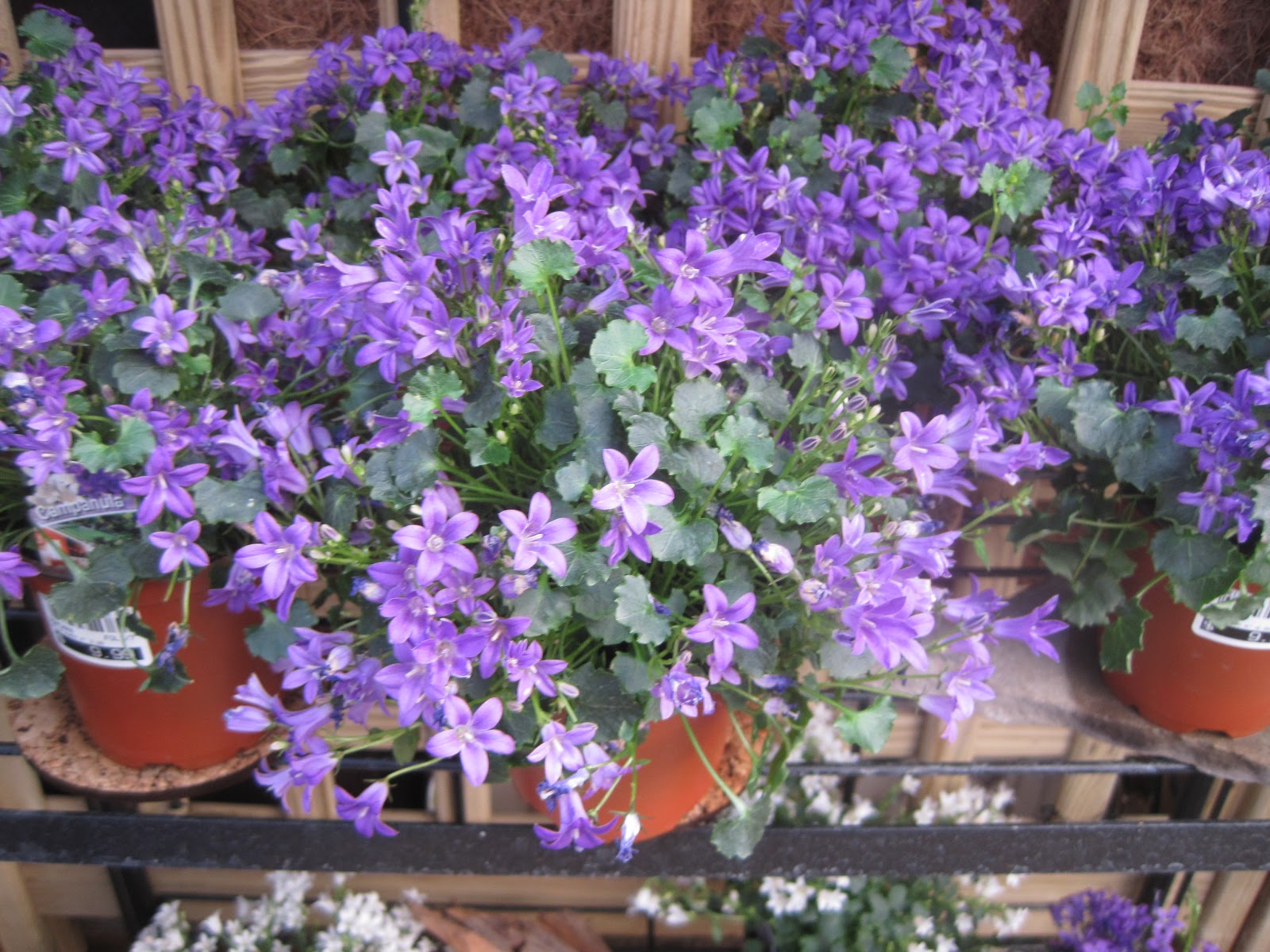
I had to take a field trip to get some pictures for today's Friday Fleurs. Not a thing blooming around here except for the poinsettias and you've seen enough of those.  So while out running errands yesterday I detoured to Merrifield to check out their orchids and winter flowering plants. I have never seen it so empty, only a handful of people walking around the greenhouse. I love to go there in the winter (if you can call this winter) and wander around the greenhouse. Their collection of orchids is truly amazing--all different types, all colors, minis,  all just beautiful. I love that chartreusey one, and the white ones just look like pure cream. They had lots of calla lilies blooming too, but I'm not really a fan of those so no pictures. Also kalanchoe and African violets, some bellflowers. They had a big selection of amaryllis in bud, wouldn't that be great to have a whole row of amaryllis, all ready to bloom at the same time? Spectacular. I'll have to think about that for next year.


Thursday, January 10, 2013

Christmas Tree


I hate getting rid of our Christmas tree. I don't mind taking it down in the house, but I hate putting it out to the curb for pickup. It's still such a pretty, perfect tree. Of course some years it's really dried out and dropping needles like crazy, but our tree this year still seems fresh. I used to always cut our tree down after Christmas, and use the branches in my garden to protect my perennials, but I don't really do that much anymore since we never get any snow. Sometimes I drag it around the backyard and pretend it's a real tree, or use it to plan where I could plant an evergreen tree. I do love evergreens and in the middle of winter when everything is gray and barren, I wish I had some more green in my garden. And now I do!

Pretty on the deck

And in the garden

Or maybe here in the garden

Wednesday, January 9, 2013

Gardening Gifts


I wrote about these books last year,  and yes I did get them both for Christmas, thanks to my most faithful blog reader. I have been reading the Rosemary Verey book at night and dreaming about her beautiful gardens. Someday I am going to go to England and see some of these English gardens...


And look at this cute watering can I got from the Langes--where does Carol find these? Last year I got this one.

And I hate to go on and on about the weather, but almost 60 degrees today, really?

Tuesday, January 8, 2013

Help Thanks Wow


I love Anne Lamott. I feel like she is an old friend of mine and I look forward to every new book she writes. I have read and re-read everything she has written and my favorite books are the ones where she writes about faith and making her way through her own crazy life.  Traveling Mercies: Some Thoughts on Faith, and Plan B: Further Thoughts on Faith are favorites. She's also written a book about writing, Bird By Bird, Some Instructions on Writing and Life. In this new little book (you can read it in an hour) she writes with humor and thoughtfulness about three simple prayers--asking for help, expressing gratitude, and feeling awe at the world. I like how she simplifies the notion of prayer and opens it up to everyone. Prayer doesn't have to be to God, but is a communication to something bigger than us.  It is a reaching out to be heard.

"Let's not get bogged down on whom or what we pray to. Let's just say prayer is communication from our hearts to the great mystery, or Goodness...to something unimaginably big, and not us." 

Monday, January 7, 2013

Gray Days

A popular tree on Teddy Roosevelt Island

Well one of these days we'll get back to gardening, but for now there's not much to report outside in my garden. I look outside in the morning and the only interesting thing I see is the sky. Everything just seems so gray and brown and monotone right now.  We need some snow, for the garden and for some winter interest.  I checked my hellebores yesterday, but no signs of buds yet. Some bulb foliage is up, but that's just a tease. I did receive my first seed catalogue over the weekend, so even though I don't usually plant seeds, I like to look at what's new and look at pictures of what I might plant this year. I still have some clean up to do outside, leaves in the gardens,  fallen branches, borders that need to be edged, a few stray pots, but those are things to be saved for a warmer day.

Yesterday we went for a walk on Teddy Roosevelt Island right off the G-W Parkway in D.C. It's only accessible by a footbridge and only for walkers, so it's a nice place to take a walk, with miles of trails,  wildlife (didn't see any), and pretty views of  Georgetown. It's so funny to have this bit of forest in the middle of the city. There were lots of walkers and runners and dog walkers, a great day to be outside, but I kept thinking how much more interesting it will be in the spring when there's something to look at besides gray. White would be nice.


View of the Georgetown waterfront
View of Key Bridge
Hey Teddy

Friday, January 4, 2013

Waiting for Blooms


Amaryllis bulb on December 10

I forgot to mention that I rescued my amaryllis bulb from the dark and cool basement about 3 weeks ago, and now I wait patiently to see if it will re-bloom. After summering outside in a shady part of my garden, I brought it in before the first frost, trimmed off the old and dead leaves, and put it in the basement in a dark corner for about 8 weeks.  This particular bulb is about 3 years old, and last year I did the same routine and it actually re-bloomed. It is now sitting in a sunny window and just in the past few days have I seen this green bud emerge.  It's pretty hard to believe that this will have some gorgeous blooms in a month or so, but I have faith. Especially now that I am seeing some signs of life.

Amaryllis on January 3

Amaryllis on January 3
I also planted my paperwhites yesterday, putting them in stones and water in a shallow pot. They usually bloom in about 3 weeks. I am looking forward to some winter blooms!

Paperwhites


Thursday, January 3, 2013

Dearie: The Remarkable Life of Julia Child

Julia Child loved people almost as much as she loved cooking, and she called her friends "Dearie," thus the title of this book. I have been a Julia Child fan for many many years since living in France and learning to love French food,  and have even made several of her recipes back in the day (mostly desserts). So I am always interested in any Julia book that comes out, and I have been waiting to read this newest biography of Julia by Bob Spitz, which was published to coincide with what would have been her 100th birthday in 2012. It's a hefty book, over 500 pages long, so I thought I'd probably skip some chapters, but happily I found the entire book fascinating.  Spitz writes about her whole life, but it's when Julia Child meets Paul Child in her 30s and moves to Paris that the book really takes off. She did not learn to cook or appreciate good food until she was 40, and it truly was a "light bulb" moment (it was while eating sole meuniere in Rouen--"the most exciting meal of my life," she later said).

"The sole was so very fresh, with it's delicate yet definite texture. This was --fish! It tasted like the sea.  Juicy--My God!--it fairly oozed a geyser of juices. And the butter! It was sweet and creamy, loaded with butterfat, and caressed her tongue with a slick, silky richness. She'd eaten butter all her life, this this defied all her previous conceptions." p. 171

And she didn't just learn to cook, she went to Le Cordon Bleu in Paris and learned to cook classical French food at a time when most Americans were happy with casseroles and jello salads. She became close friends with two French women, Simone Beck and Louisette Bertholle, with whom she would later write Mastering the Art of French Cooking.

 I loved reading about her food discoveries in Paris, and the markets where she shopped and the meals she had in the little French bistros she and Paul frequented.  I had no idea that it took her and her co-authors Simone Beck and Louisette Bertholle more than 10 years to complete Mastering the Art of French Cooking.  Every recipe was tested and refined 15 to 20 times in their tiny French kitchens and Julia was obsessed with the details of every recipe. While the French women were more inclined to be vague in their instructions, Julia wanted to make French cooking understandable and accessible to American cooks and had to press them repeatedly to make their recipes more precise. The way Spitz describes the ingredients and the process of cooking these recipes is remarkable--your mouth is practically watering as your read.

It's so fun to hear accounts of her friendships and entertaining with famous cooks, like James Beard, Alice Waters, Wolfgang Puck, Elizabeth David, Sara Moulton,  and of course Jacques Pepin, with whom she wrote several books and worked with on tv. One fun fact is that she loved Goldfish crackers and liked to serve them as hors d'oeuvres. Then of course came her surprising and immediate success on public television. Who knew watching someone cook an omelet on television could be so entertaining? Julia Child was surely the first of the cooking shows and absolutely changed the direction of public television, and indeed paved the way for  today's tv cooks and the Food Network. She kept working and cooking into her 90s, and Spitz describes her later years with great care and affection. The greatest gift the author gives us in this book is that Julia truly comes to life. She wasn't perfect, that's for sure,  but she was always true to herself.  She was a huge personality, opinionated and passionate,  loud and bossy, a good wife and a good friend, right up until her death in 2004, two days before her 92nd birthday. A great read, Dearie.