Showing posts with label Gardeners. Show all posts

Tuesday, August 7, 2012

Margaret's Garden

Photo via Washington Post

When I first moved to Herndon in 1979, my elderly neighbor who lived across the street soon realized I liked flowers and offered to take me to her friend's garden on Lawyers Road, on the edge of Herndon, where she sold bearded irises. Well, little did I know that was my introduction to the garden of Margaret Thomas, who came to be quite a gardening legend over the next thirty years. Her garden of over five acres was devoted to more than 2000 varieties of iris, and people driving by would stop and admire her flowers, and over the years people from all over would come to visit her garden, set up easels and paint, take photographs, and of course, place orders. There were articles about her in The New York Times and The  Washington Post. "Some gardens should be preserved because they are works of art," Anne Raver wrote in The Times. "But others are made by ordinary people doing extraordinary things--like planting a field of flowers that becomes the heart of a community." I can remember walking around her garden and picking the irises I wanted, and Margaret would write my name in a notebook, noting the named irises I chose. In August  or September, she would dig up the rhizomes and I would receive a phone call, saying that I could come pick them up.

This is a story many people in town can repeat, as so many of us have been to Margaret's garden and have irises that came from her.  She died in 2011, and many people have worked tirelessly to save the garden, but its future remains uncertain. The county declined to purchase it, so now it is in legal limbo, but probably will succumb to development.

Margaret's house
The town of Herndon has an art exhibit going on right now at the ArtSpace Gallery, with photographs of Margaret and her garden, as well as paintings and drawings done by 39 local artists showing the garden over the years. Gillian and I went to see the exhibit last week and it brought back memories for both of us. I am so glad the town has made this tribute to one of its most famous gardeners. But it also made me think about what happens to a garden without its gardener. I sure hope that if Margaret's garden cannot be saved, that area garden clubs will step in and save the plants, so that Margaret's irises will live on in many, many other gardens.

Margaret's irises

Collage of photos


Monday, February 6, 2012

Mount Vernon Gardens

Boxwood parterre at Mount Vernon,  and greenhouse to the right, 2009
Yesterday Prudy and I went to hear a lecture at Green Springs Garden Park by Dean Norton, chief of horticulture at Mount Vernon. He was a great speaker, very engaged with the audience,  and relayed so many interesting details about the history of the gardens at Mount Vernon, and about all the work they have done to restore the Upper Garden according to George Washington's plans, a huge venture which was just finished about a year ago. Archaeologists dug up the gardens and were able to find many clues about how the gardens had been laid out in the 1780s and what had been planted there. Norton showed slides of the gardens at different times over the years, and of George Washington's actual drawings and plans for the gardens and greenhouse, as well as for the main house and outbuildings. Walt and I were there in the fall of 2009, and I can remember seeing the archaeologists digging in the garden when we were there. That's so amazing that they could tell the borders of the garden and what had been planted there during George Washington's life.

Gardens 2009

Now the garden is planted with heirloom plants, bulbs, perennials, annuals, shrubs, and roses, in keeping with what George Washington had planted. You can't see it very well, but in the picture above there is an archaeologist behind me sifting through garden soil at a table. We were there right when they started the garden renovation. So now we will have to go back for a visit this spring and see the gardens that George Washington planned.

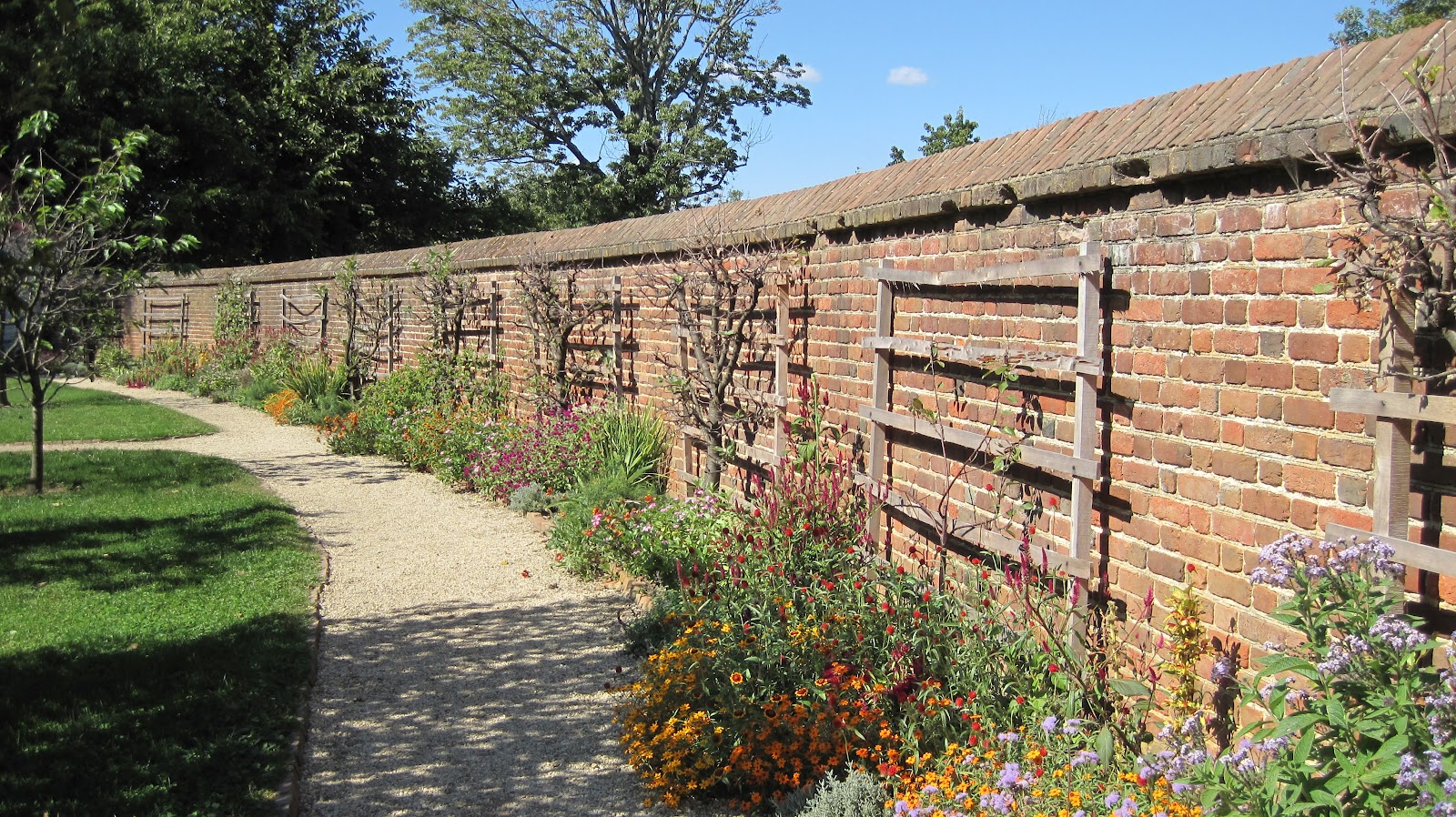
Serpentine walls that have enclosed the gardens since George Washington's time

And below are a few pictures of plants blooming around Green Spring Park on a cold February afternoon.

Winter aconite

Winter jasmine

Hellebore foetidus

Crocus
And of course it was Super Bowl Sunday, so later in the day we headed over to the Bensons to watch the game with the Rubards. Gillian made some delicious appetizers, minestrone soup, bread, and homemade cookies. We ate our way through the game, and all were happy to see the Giants win.

Friday, December 2, 2011

Helen Van Pelt Wilson


"Trivial annoyances slough off in a garden and problems often solve themselves there as you weed and plant."--Helen Van Pelt Wilson


One of the first gardening books that I read back in the day and that I really loved was Helen Van Pelt Wilson's Own Garden and Landscape Book, published in 1973. I think I first found it in the library in the 1980s and later ordered it from Alibris or some other online used bookstore. (We had no online then, so how did I get it? I have no idea.) I was absolutely fascinated with her account of how she acquired and planned and planted her property in Westport, Connecticut and I just loved it. I wanted to have a garden exactly like hers. I pored over her diagrams and photos, examining the paths she made, the edging on her garden beds, loving how she planted different gardens and named them-- the Look-Into Garden, the Apple-Tree Garden, the Fern Garden,  the Dooryard Garden. I wanted a Look-Into Garden. I think it was from her that I first started thinking about perennials, as she wrote mostly about the permanent plants in a garden, the trees and shrubs first, then the perennials and bulbs,  and she gave me a lot of ideas for the best perennials to plant.


 I also liked how she created gardens thinking about the views from her house. She would place flowering trees where she could see them easily from the windows inside her house. She liked to plant special little gardens around doorways (Dooryard Gardens) with her favorite flowering and fragrant plants that she could admire every time she entered the house. She wrote from a very personal perspective, so that I felt like I was following her around her property. I felt like I knew her. And best of all, she has a chapter at the end titled, "My What To Do When List," with monthly tasks for the garden. Right up my alley.  Here is what she says for December:

This is a time to be complacent. With all possible outdoor tasks completed--or forget them if they aren't--let's enjoy the winter views from our windows, the silhouettes of trees, the dark hues of evergreens, the nice property design we've worked on. 

Many of the perennials I have today were recommended by HVPW--hellebores, anemones, coral bells, candytuft-- and several  of my shrubs/trees were recommended by her--mahonia, snowbell, serviceberry, fringetree. Foliage was more important to her than the flowers. Of course some of the book is kind of dated--she used a lot of pesticides back then, but much of it remains true.  I googled her the other day and found that she died several years ago at the age of 102. She was one of those people I sometimes wish I had written to, thanking her for her writing which had such a big influence on me, and really inspired me to be a gardener.

She also wrote The Joy of Geraniums, The New Perennials Preferred, Fragrant Year: Scented Plants for Your Garden and You,  Houseplants Are For Pleasure, and a few others. All are out of print, except maybe the Perennials Preferred, but you can still find the old ones from used book dealers. I have several of her books.

I love all my old gardening books, but this one is my fav.

Wednesday, September 14, 2011

Defiance

Henry Mitchell
I have started re-reading one of my favorite garden writers, Henry Mitchell, who used to write for the Washington Post.  When I first moved to Washington, D.C. in the 1970s I started reading his "Earthman" column in the Post.  My best friend Patty and I used to love his columns so much and talked about them often, even after she moved to Portland in 1978. We would talk about and plan our gardens even before we had gardens. When his books came out we gave them to each other as gifts. I first heard of hyacinth beans from him, and how to plan a garden on paper. It was because of him that I started keeping records of when things bloom year to year. I think the first column I remember of his was about daffodils and it is because of him that I plant the daffodil "Cheerfulness" in my garden.  I learned about the  Bishop's Garden at the National Cathedral and Dumbarton Oaks from Henry Mitchell, and they are two of my very favorite places.  I haven't read him for awhile and it was such a pleasure to pick up The Essential Earthman again and rediscover all the gems inside. Here is a favorite passage:

"There are no green thumbs or black thumbs. There are only gardeners and non-gardeners. Gardeners are the ones who ruin after ruin get on with the high defiance of nature herself, creating, in the very face of her chaos and tornado, the bower of roses and the pride of irises. It sounds very well to garden a "natural way." You may see the natural way in any desert, any swamp, any leech-filled laurel hell. Defiance, on the other hand, is what makes gardeners."