Showing posts with label Books. Show all posts

Tuesday, September 8, 2015

Books On My Nightstand


I've taken quite a breather from the blog this summer, but thought I'd do a quick update on books. It's been a good summer for books~~ I've been trying to catch up on some of the books on my nightstand and there have been some good ones.

  • A God in Ruins, by Kate Atkinson~~great book, just as good as Life After Life, which I loved. It's a companion book to Life After Life, but you don't necessarily need to read that one first.
  • Radiant Angel, by Nelson DeMille~~another thriller about John Corey, who's  saving our world, thank goodness.
  • The Truth According to Us, by Annie Barrows--recommended to me by my friend Mary.
  • The Children's Crusade, by Ann Packer.
  • Among the Ten Thousand Things, by Julia Pierpont.
  • Euphoria,  by Lily King~~ I heard the author on NPR and this sounded so good. Fiction about Margaret Mead.
  • Everything I Never Told You, by Celeste Ng~~sad but interesting book I read earlier in the summer and liked it a lot.

Thursday, July 2, 2015

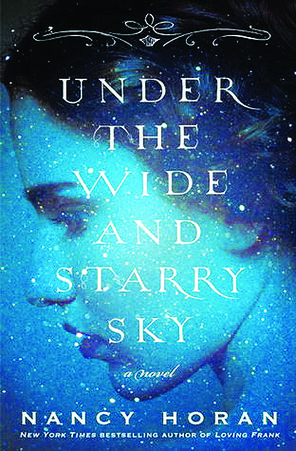
Under the Wide and Starry Sky

My book group at the library read this book for June and we discussed it on Tuesday night.  I loved Nancy Horan's first book, Loving Frank, about the life of Frank Lloyd Wright and his wife Mamah. The author does so much research for her books that you really wonder what is fact and what is fiction, something that sparked a whole separate discussion on the genre of historical fiction.  Under the Wide and Starry Sky is about the life of Robert Louis Stevenson and his American wife Fanny, and it is based on extensive research, including the many letters of both Louis and Fanny.  They had a fascinating life of love and adventure and I enjoyed the book, although it's a little slow going at times. We all agreed it (like many books) could have been 100 pages shorter. The life Louis and Fanny led, living in France, England, Scotland, Australia, Switzerland, California,  and finally sailing the South Pacific and living in Samoa was really amazing, especially considering they were living in the late 1800s.

Stevenson was a sickly man much of his life, and Fanny nursed him and nurtured his career so that he could write the classics Treasure Island, Kidnapped, and The Strange Case of Dr. Jekyll  and Mr. Hyde, among others. (Interesting fact: Stevenson borrowed the name Jekyll from family friend Gertrude Jekyll, the legendary English gardener!). Fanny sacrificed her own dreams (not always happily) of being a painter and a writer, certainly not unusual for that time period. There was lots to talk about with this book, and while most people liked the book, a few did not and that always makes for a good discussion.

Robert Louis Stevenson's epitaph:

Under the wide and starry sky,
Dig the grave and let me lie,
Glad did I live and gladly die,
And I laid me down with a will.
This be the verse you grave for me:
Here he lies where he longed to be,
Home is the sailor, home from sea,

And the hunter home from the hill.

Thursday, March 19, 2015

The Girl on the Train

There's been a lot of hype about this first novel by author Paula Hawkins, comparing it in genre to Gone Girl. I did not like Gone Girl, and was hoping for more in this 'marriage thriller, ' which has the same kind of creepy characters and twists in the story. The main character is Rachel, whose life is pretty much falling apart--her husband has divorced her, she has lost her job, and she's definitely drinking too much.  To keep up appearances, she still rides the train into London every morning, and on her daily commute she observes the back gardens of several homes and the people who live there.  One couple in particular fascinates her and she imagines their perfect lives as she passes by--until one day when she observes something that's not quite right. When the woman she sees from the train goes missing the next day, Rachel is obsessed with what happened and becomes involved in the story. 

I wanted to like this book, it seemed like such a great premise, the idea of watching people from a train every day and imagining their lives. By the end, however, like with Gone Girl, I was tired of the characters and pretty much wanted to ring Rachel's neck. Still readable, though!

Tuesday, March 17, 2015

All the Light We Cannot See

Such a good book. Wonderful characters, compelling story, emotion, beautiful language, some mystery, this book has it and more. It begins in 1944 and goes back and forth in time during the years of the Nazi occupation of France in 1940 and the liberation in 1944. Marie-Laure LeBlanc is a young French girl, blind since age 5 and living with her father in Paris. He is an expert locksmith, working for the National Museum of Natural History, and his mind works in details--with his work and with his daughter for whom he contructs intricate puzzle boxes for her birthdays, and miniature models of the streets where they live so that she can learn her way around and not be afraid of what she cannot see.  When the Nazis come and occupy Paris, Marie-Laure and her father flee to St. Malo, a walled town on the coast of France and move in with her reclusive Uncle Etienne in his tall house by the sea.

Parallel to Marie-Laure's story is Werner Pfennig, a young German boy who grows up in an orphanage in Zollverein, Germany.  Enthralled by the French radio broadcasts about science that he and his sister Jutta grow up listening to, Werner becomes fascinated with radios and electronics and soon becomes adept at fixing things in his small village. Eventually his skills are recognized by the Nazis and he is sent to a German technical school –a way out of the coal mines where his father died, but now his future lies with Nazi Germany.   

How the author interweaves the story of Marie-Laure and Werner is magical, full of themes of light and dark, the beauty of the natural world, moral questions, and always the light that continues to shine despite the darkness of war. It’s also a book about the senses—what the eyes can and cannot see, the voices heard over the radio, the feel and smell of the salty air and the ocean.

I thought it was a beautiful story, filled with stories of courage and humanity.  Recommend highly.


“The brain is locked in total darkness of course, children, says the voice. It floats in a clear liquid inside the skull, never in the light. And yet the world it constructs in the mind is full of light. It brims with color and movement. So how, children, does the brain, which lives without a spark of light, build for us a world full of light?”

Wednesday, February 25, 2015

Books On My Nightstand


  • Nora Webster, by Colm Tóibin. I'm a fan of Colm Tóibin and this is his latest.
  • Fear the Darkness, by Becky Mastermind. What's next for retired FBI agent Brigid Quinn?
  • The Girl on The Train, by Paula Hawkins. I'm reading this now and it's good!
  • Adultery, by Paulo Coelho. Good reviews.
  • Fingersmith, by Sarah Waters. Next book club pick, by the author of The Paying Guests (so good).
  • The Life-Changing Magic of Tidying Up, by Marie Kondo. Time to tidy up, right up my alley.

Thursday, February 19, 2015

Rage Against the Dying

I just recently discovered this author thanks to my friend JoAnn who recommended this book.  This is a first novel, and the author was an editor of forensics textbooks written for medical examiners and law enforcement, so she knows the details of crime. The main character is 59-year old Brigid Quinn,  a former FBI agent, who has spent her career chasing serial killers and sexual predators and has seen and done a lot of bad things. She's had to retire from the FBI for vague reasons (maybe killing an unarmed person?) and now finds herself unexpectedly and happily married for the first time to a former Catholic priest and philosophy professor (who knows nothing of her past career).  When a serial killer she has been chasing for many years crosses her path again, she can't help but get involved in the case again  and nearly loses everything. The story is good, and Brigid is a great and appealing character, strong and gutsy, with flaws that only make her more appealing.  I really enjoyed the book and am looking forward to reading the next one, Fear the Darkness, newly released.

Friday, January 30, 2015

Benediction

'Dad' Lewis, a respected but somewhat gruff member of his small community of Holt, Colorado, has just been given the news that he is dying, and that this will be his last summer.  With the help of his wife Mary and daughter Lorraine, he prepares himself and his family and friends for his death, making amends with the few people he feels he has wronged,  and making sure his family knows he loves them.  His biggest regret is the failed relationship with his gay son, whom he simply could not understand, and from whom he is now estranged. Set in the same town as Haruf's earlier novels, Plainsong and Eventide,  we get a glimpse of this small community, the place Dad held in the town, and the people who have touched his life.  Other stories parallel Dad's-- a young girl who moves in next door with her grandmother, a young preacher who brings controversy and conflict to the town, the loyal employees of Dad's hardware store--all reminders that life goes on.  While the book is structured around Dad, women are an important part of the story--their strength, their friendship, the bond between mothers and daughters. A nice story, beautiful, simple writing, I enjoyed the book very much.

One of my favorite passages in the book is when the young preacher takes a night-time walk through the town and is stopped by a policeman:


Is there something wrong with you? What are you doing out here?
I'm just walking. Having a look around town.
Your family knows where you are?
They know I'm taking a walk.
It doesn't bother you to look in other people's houses? You think that's all right.
I don't think I'm doing any harm. I didn't mean to.
Well, these people don't like it. This man called you in.
What did he say?
That you were looking in his house.
Did he say what he was doing in his house?
Why would he say that?
People in their houses at night. These ordinary lives. Passing without their knowing. I'd hoped to recapture something.
The officer stared at him.
The precious ordinary.
I don't know what you're talking about, but you'd better keep moving.
I thought I'd see people being hurtful. Cruel. A man hitting his wife. But I haven't seen that. Maybe all that's behind the curtains. If you're going to hit somebody maybe you pull the curtain first.
Not necessarily.
What I've seen is the sweet kindness of one person to another. Just time passing on a summer's night. This ordinary life.

The precious ordinary. How true.

Tuesday, January 27, 2015

Books On My Nightstand


  • We Are Not Ourselves, by Matthew Thomas. I really liked this book about a family in post WWII New York,  but it's kind of sad.
  • Some Luck, by Jane Smiley. I loved Jane Smiley back in the day and am anxious to read her latest.
  • The Boys in the Boat, by Daniel James Brown. Haven't read this yet, but have heard only good reviews.
  • Benediction, by Kent Haruf. Just finished this latest book by the author of Plainsong and Eventide. Thought it was great. 
  • Sissinghurst: Vita Sackville-West and the Making of a Garden,  by Vita Sackville-West and Sarah Raven. Can't wait to dig into this book I got for Christmas.

Tuesday, January 13, 2015

Books of 2014


2014 was a good year for reading. Here are all the books I read in 2014~~some great books, lots of mediocre books, easy beach reads, some non-fiction, book club books. I found a few new (to me) authors that I really like (Louise Penney, JoJo Moyes, Maggie Shipstead, Sarah Waters), and some old favorites (Ian McEwan, Anne Lamott). I sadly read the final book in the Wallander series. I discovered a few new Scandinavian authors. Unfortunately, one of my favorite authors, Anne Rivers Siddons, really disappointed me this year with her new book The Girls of August. She is one of my all time favorites, but this one I could barely finish.  My favorites for 2014 are highlighted in bold.

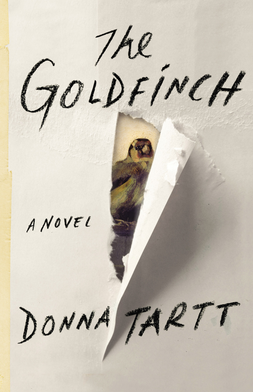
The Goldfinch, by Donna Tartt
Beatrix Potter’s Gardening Life, by Marta McDowell
We Are Water, by Wally Lamb
O Pioneers, by Willa Cather
Survival Lessons, by Alice Hoffman
The Gods of Guilt, by Michael Connelly
A Troubled Man, by Henning Mankell
Still Life, by Louise Penny
The Lowland, by Jhumpa Lahiri
My Beloved World, by Sonia Sotomayor

Reconstructing Amelia, by Kimberly McCreight
How the Light Gets In, by Louise Penny
The Unlikely Pilgrimage of Harold Fry, by Rachel Joyce
A Colder Kind of Day, by Gail Bowen
The Cuckoo’s Calling, by Robert Galbraith
Sweet Tooth, by Ian McEwan
Me Before You, by JoJo Moyes
The Girls, by Lori Lansen
Island Girls, by Nancy Thayer
A Fatal Grace, by Louise Penny

Hypothermia, by Arnaldur Indridason
The Art Forger, by B.A. Shapiro
The Husband's Secret, by Liane Moriarty
All Fall Down, by Jennifer Weiner
The Arsonist, by Sue Miller
The Fault in Our Stars, by John Green
The Silkworm, by Robert Galbraith
The Language of Flowers, by Vanessa Diffenbaugh
Virginia Woolf's Garden, by Caroline Zoob
One Plus One, by JoJo Moyes

The Headmaster’s Wife, by Thomas Green
The Girls of August, by Anne Rivers Siddons
Always Watching, by Chevy Stevens
The Last First Day, by Carrie Brown
The Silver Star, by Jeannette Walls
The Ice Princess, by Camilla Lackberg
The Vacationers, by Emma Straub
And the Mountains Echoed, by Khaled Hosseini
Seating Arrangements, by Maggie Shipstead
The Divorce Papers, by Susan Rieger
Astonish Me, by Maggie Shipstead

Out of the Woods: A Memoir of Wayfinding, by Lynn Darling
Beautiful Ruins, by Jess Walter
The Paying Guests, by Sarah Waters
The Children Act, by Ian McEwan
Off Course, by Michelle Hunevern
The Long Way Home, by Louise Penny
Dear Life, by Alice Munro
All the Light We Cannot See, by Anthony Doerr
You Should Have Known, by Jean Hanff Korelitz
Small Victories: Spotting Improbable Moments of Grace, by Anne Lamott
Gray Mountain, by John Grisham

Wednesday, January 7, 2015

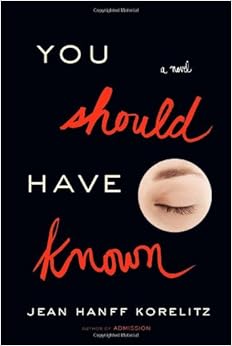
You Should Have Known

Grace is a marriage therapist who has just written a book about relationships, and about the red flags that people should pay attention to when choosing their partners. Grace lives a pretty nice life on the upper East Side of NYC with her pediatric oncologist husband, and their 12 year old son, Henry.  Grace's book, You Should Have Known,  is about to come out, and she is busy promoting her book on talk shows and in magazine interviews.  At the same time she is trying to find her place among the gossipy moms at her son's private school.  And then,  the mother of a 'scholarship' child at her son's school is murdered.  Grace’s  husband is out of town and not answering his phone. What happens next turns Grace's life upside down. Everything she believed about relationships, her husband, her marriage, her life, is pretty much wrong. While not a great book, it kept my interest and I wanted to keep reading to see what happened.  The book is pretty much all about Grace—you really don’t get to know her husband, or her son and how this all affects him. The ending is fairly predictable, a little too neat perhaps, but I enjoyed the book.

Monday, December 15, 2014

The Children Act

I've been on a roll lately with good books.  I've liked Ian McEwan's books in the past and I liked his latest one, The Children Act.  

Fiona Maye is a British High Court judge in the Family Division, and has spent the past 30 years building her career and reputation.  Here she is faced with deciding the case of a child with leukemia who is refusing a blood transfusion based on religious beliefs. Without the treatment, he will die, and Fiona must decide whether to overrule the family's wishes regarding the withholding of treatment. The Children's Act of 1989 directs her to rule in favor of the welfare of the child. Fiona takes her job very seriously and in one of the best scenes in the book, she visits the teenage boy in the hospital, where they have an interesting and emotional meeting. At the same time she is studying this case, she is dealing with a crisis in her marriage, and the realization of the sacrifices she has made in her personal life for her profession. 

“Welfare, happiness, well-being must embrace the philosophical concept of the good life. She listed some relevant ingredients, goals toward which a child might grow. Economic and moral freedom, virtue, compassion and altruism, satisfying work through engagement with demanding tasks, a flourishing network of personal relationships, earning the esteem of others, pursuing larger meanings to one’s existence, and having at the center of one’s life one or a small number of significant relations defined above all by love.“Yes, by this last essential she herself was failing.”

Tuesday, November 11, 2014

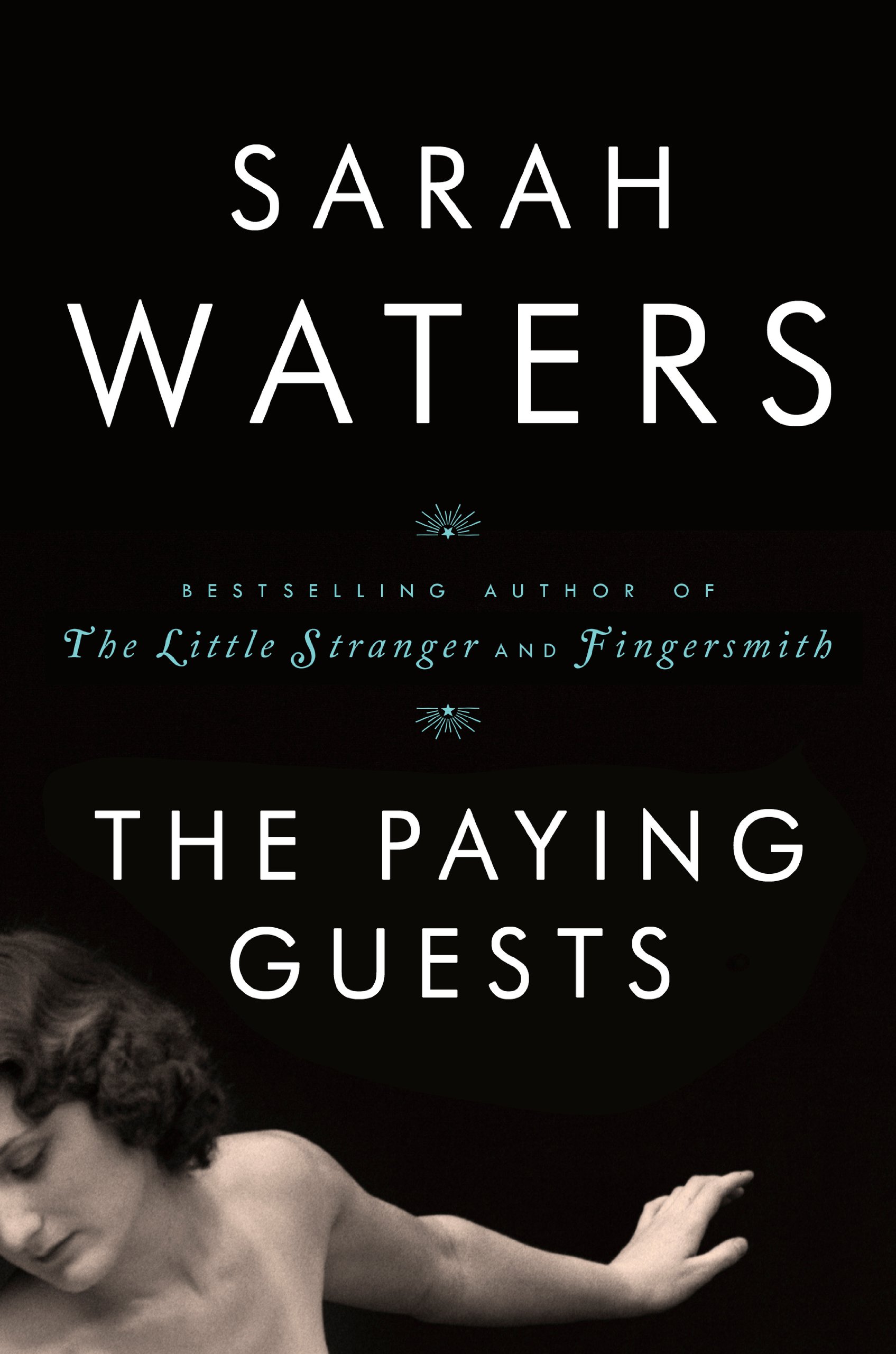
The Paying Guests

I've never read Sarah Waters before but I am hooked now and have already put another of her books on hold. I seriously couldn't put this book down. The story takes place in post-WWI London, and the author does a great job of depicting the bleak times--the war-injured veterans, the disillusioned and unemployed, the devastated economy, class tensions.  Frances Wray is a single woman in her late 20s, who lives with her mother and is trying to cope with life after the war--and the deaths of her two brothers,  the financial mess her dead father has left behind, and the challenges of keeping a house without servants.

Hoping to be able to stay in their house,  Frances and her mother are forced to take in lodgers ('paying guests') to help pay the bills. When a young couple, Mr. and Mrs. Barber,  move in to the house, the Wrays must make adjustments to their life, and Frances' dreary life takes a great big turn-- with far-reaching and devastating consequences. This is a finely written story of domestic life, class structure, and moral dilemmas,  that weaves in romantic love and true crime.  It's a long book, maybe a little too long, but with many twists and turns that keep you guessing until the very end.

“...She worked briskly and efficiently, taking her brush and pan from the drawing-room to the top of the stairs and making her way back down, a step at a time; after that she filled a bucket with water, fetched her kneeling-mat, and began to wash the hall floor. Vinegar was all she used. Soap left streaks on the black tiles. The first, wet rub was important for loosening the dirt, but it was the second bit that really counted, passing the wrung cloth over the floor in one supple, unbroken movement... There! How pleasing each glossy tile was. The gloss would fade in about five minutes as the surface dried; but everything faded. The vital thing was to make the most of the moments of brightness. There was no point dwelling on the scuffs.” 

Wednesday, November 5, 2014

Beautiful Ruins

I am continuing to read books that have been on my 'To Read' list for months (years?). I had started Beautiful Ruins last year, but didn't get into it and then my book group picked it to read this fall and I pushed through. There is so much going on in this book it's hard to describe and that's probably what put me off the first time.  But it begins on a rocky coastline in Italy, in the fictitious village of Porto Vergogna, near the more picturesque colorful villages called Cinque Terre. It's the 1960s, and young innkeeper Pasquale Tursi is trying to attract tourists to his family's simple little pensione, aptly named The Hotel Adequate View.  A young and beautiful American actress, Dee Moray,  arrives by boat to stay at his hotel, having been sent away from a film set in Rome (yes, Cleopatra with Richard Burton and Elizabeth Taylor) because she is ill and has been told she is dying. A series of events unfold that change the direction of Pasquale's life.  Richard Burton makes an appearance, as does the flamboyant Hollywood director, and an American wannabe writer, who spends three months of the year writing at the Hotel Adequate View. From here multiple different stories spin out, spanning sixty years. It's kind of confusing, but you gradually realize that all the stories mean something and come together in the end, making a quite lovely story.   I especially loved the setting--I've been kind of obsessed with the idea of Cinque Terre for awhile, and it was fun to read a little about this part of Italy. I think it would make a great movie.

"Life picks up speed like a boulder rolling down a hill, easy and natural and comfortable, and yet beyond control somehow; it all happens so fast, you wake a young man and at lunch are middle-aged and by dinner you can imagine your own death.
So don't inhabit the vast, empty plateau where most people live, between boredom and contentment.
...embrace the sweet lovely mess that is real life. " ~~Beautiful Ruins

Cinque Terre (photo via Pinterest)

Thursday, October 23, 2014

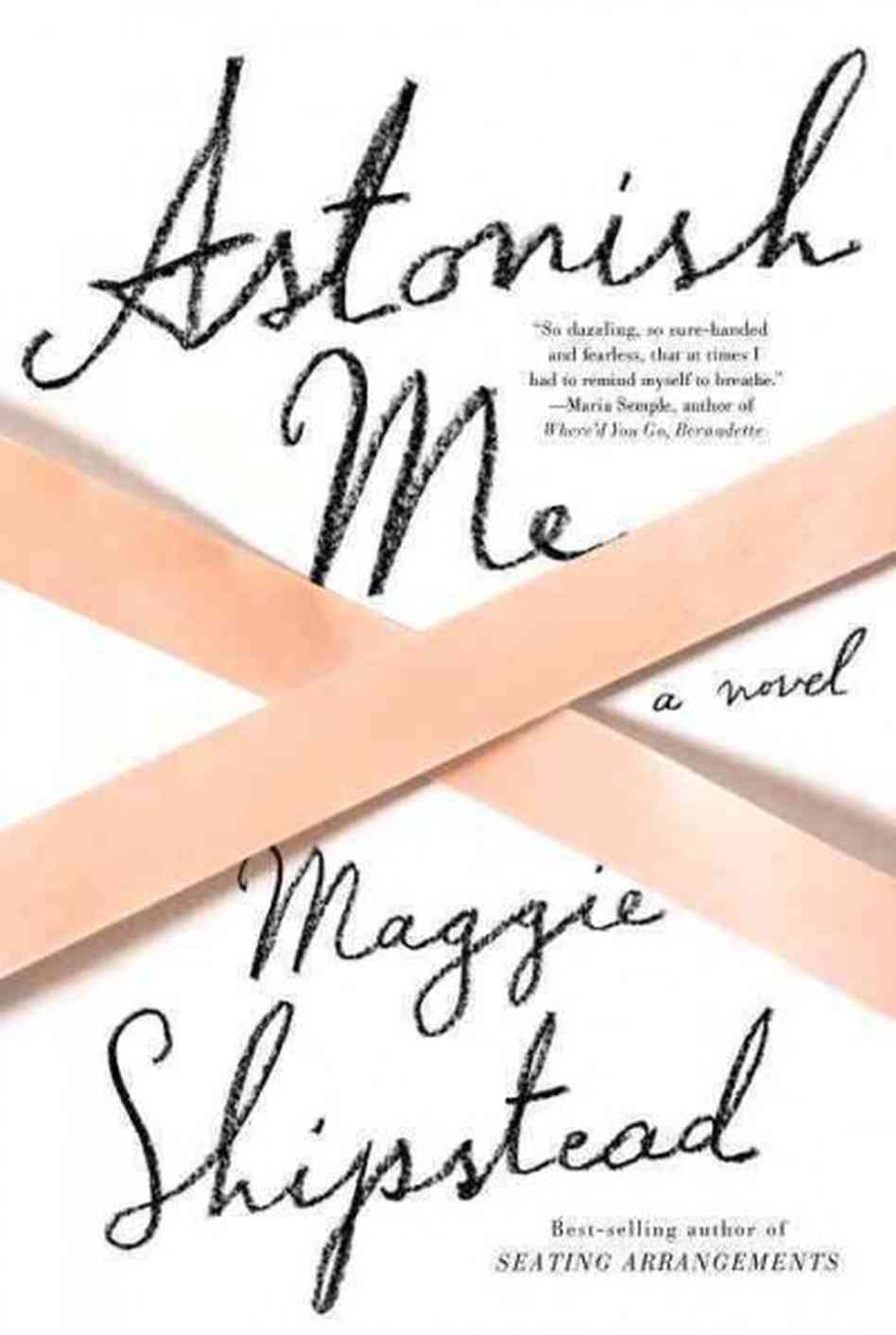
Astonish Me

I really liked this book about the intense world of ballet and a young ballerina in NYC, Joan Joyce,  who is a good but not great dancer who will probably never be good enough to leave the corps de ballet. While dancing in Paris,  Joan falls madly in love with a young Russian dancer Arslan Rusakov (probably modeled after Mikhail Baryshnikov) who she eventually helps defect to the United States. As his fame grows,  he quickly loses interest in Joan (who is not 'good enough'), and she realizes she is never going to be a prima ballerina.  She decides to leave New York and marries an old friend, moves to California, raises a son, and teaches ballet to a new generation of young hopefuls. No surprise when her son Harry develops into a promising ballet dancer himself, a real protégé, and brings Joan back into her old world of ballet, and inevitably back to Arslan, and her old friend Elaine.  Set in New York, Paris, and California, this is a story of ballet, but also of relationships, family, and truth.

Very well written, and with a cast of interesting characters,   Astonish Me shows the many facets of professional ballet--the nature of  talent, the idea of 'perfection,'  the decisions dancers must make, and the inexplicable hold ballet holds over them throughout their lives.

Thursday, October 16, 2014

Books On My Nightstand


So many good books to read in October. Here's what I'm reading this month.


  • The Heist, by Daniel Silva. Newest thriller with super spy and art restorer Gabriel Allon.
  • Personal, by Lee Child. Jack is back.
  • The Long Way Home, by Louise Penny. Chief Inspector Gamache is retired...really?
  • The Paying Guests, by Sarah Waters. Great reviews.
  • The Children Act, by Ian McEwan. Looking forward to reading McEwan's newest. 
  • Sheltering Rain, by JoJo Moyes. First novel by the author of Me Before You, and One Plus One, both of which I liked. 

Tuesday, September 16, 2014

The Vacationers

When New Yorkers Franny and Jim Post take their family to the island of Mallorca for a two week vacation to celebrate their 35th wedding anniversary, it sounds ideal.  Joining them are their teenage daughter Sylvia and adult son Bobby, and Franny's best friend Charles and his husband, Lawrence, who are waiting to hear if they've been picked to adopt a baby boy. Bobby brings along his 40-year old girlfriend Carmen, who nobody likes, and Sylvia is happy to escape New York  because she has just been humiliated by an embarrassing Facebook post.  But wait there's more, we find out Jim has recently been fired from his Manhattan magazine job for having an "inappropriate" relationship with a 20-year old intern, so there's that.  Oh, and Bobby's real estate career isn't going so well and he's in major debt due to a bad investment. A sexy Spanish tutor and a tennis superstar add to the mix and make for an interesting vacation.

The Vacationers is an easy read, good vacation reading.  I expected a little more from this book after all the great reviews. There's really not much of a plot, and the relationship issues are lightly handled, which isn't all bad.  But it's a fun read, and I enjoyed reading about their sunny days in Mallorca and the elaborate meals and picnics that Franny prepares for her family, while trying to decide the future of her marriage.

Thursday, September 4, 2014

Books On My Nightstand


So many good books to read in September!  Here is what is on my nightstand right now.

  • The Invention of Wings, by Sue Monk Kidd. Have heard good reports about her latest book. 
  • Somewhere Safe With Somebody Good, by Jan Karon. Father Tim is back!  The latest Mitford book from Jan Karon. 
  • 10% Happier, by Dan Harris.  I'm interested in how the author (an ABC news anchor) used meditation and mindfulness to help his anxiety and increase his happiness. 
  • The Ice Princess, by Camilla Lackberg. Another book recommended by the mystery book club at my library. Several people came out of the meeting and told me I should read it. Well, okay!
  • The Vacationers, by Emma Straub. Good critical reviews, but mixed friends reviews.
  • The Family Man, by Elinor Lipman. I love Elinor Lipman and couldn't resist picking this one up the other day. If you haven't read her, you should.
  • Mister Owita's Guide to Gardening, by Carol Wall. I have had this book on hold for ages at the library and it finally came in. A memoir about a women's friendship with her gardener.

Friday, August 22, 2014

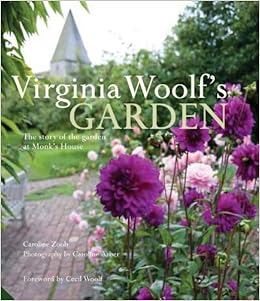
Virginia Woolf's Garden

“Our garden is a perfect variegated chintz…asters, plumasters, zinnas, geums, nasturtiums…all bright, stiff, upstanding, cut from brightly coloured paper as flowers should be.” ~~Virginia Woolf


This is just my kind of book. English garden, literary references, gorgeous photographs...Virginia Woolf. This is a  book about Monk's House, the Sussex garden that inspired Virginia Woolf,  and where she lived with her husband Leonard (of Bloomsbury fame) from 1919 until their deaths (Virginia's suicide in 1941 and Leonard's death in 1969).  Author Carolyn Zoob had a unique perspective as she and her husband lived at Monk’s House for ten years beginning in 2000 and helped to restore the garden as tenants under the National Trust, as well as welcoming visitors to the house and garden twice a week.


Virginia in the garden

 Unlike her close friend Vita Sackville-West, Virginia was not a gardener. The garden was a pleasure and an inspiration for her, but Leonard was the gardener,  designing and executing detailed garden plans, building brick pathways and borders and stone walls, planting yew hedges,  grafting fruit trees, and working into the garden well into his eighties.


Zoob shares Leonard's garden plans, as well as anecdotes about the daily life of Virginia and Leonard. Virginia's favorite color was green and she liked to paint her rooms green.  They loved having breakfast in the small kitchen with the door open to a brick terrace. They argued about Leonard building a greenhouse. In photographs, passages from Virginia's diaries and letters, and in embroidered pictures of the garden she created while living in the house, the author brings to life the garden so lovingly created and tended by Leonard, and enjoyed by Virginia.


'L is doing the rhododendrons' ~~ was the last diary entry Virginia made before putting stones in her pockets and jumping into the nearby river Ouse.


The view from the kitchen, oh for a view like this every morning!


These embroideries done by the author are just amazing.

Detail of embroidered garden 

Friday, July 18, 2014

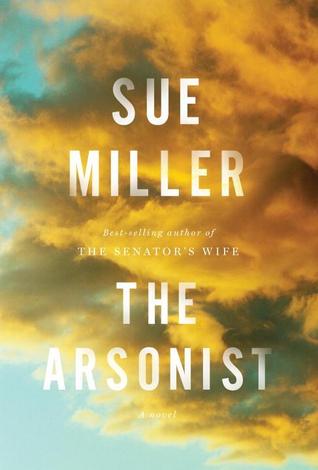
The Arsonist

I haven't read a book by Sue Miller (The Senator's Wife, The Lake Shore Limited) in awhile and I liked her newest one. Set in a small town in New Hampshire, it is the story of Frankie Rowley, a young woman who has been working for the past 15 years in East Africa. Exhausted and somewhat jaded about the aid work she is doing in  Africa, she comes home to New Hampshire, where she spent summers as a child and where her retired parents now live. But as soon as she arrives, mysterious fires are being set in summer homes across the town. Tensions are high among the permanent residents and the 'summer people.' She begins a relationship with the publisher of the local newspaper, and tries to make peace with her aging, and ailing parents. This is a book about what home means, and where you belong. Not all questions are answered, and I liked the uncertainty that you are left with at the end of the book. No set answers, just like real life. Very readable, a good summer read.


Wednesday, July 9, 2014

Books On My Nightstand


It's a rainy morning here in the garden today, so let's look at what I'm reading lately.


  • Burial Rites, by Hannah Kent--a novel inspired by the true story of a young woman accused of murder in Iceland in 1829. Highly recommended to me by my library friends.
  • The Silkworm--second Cormoran Strike book (Cuckoo's Calling was the first) by Robert Galbraith (aka J.K. Rowling).
  • The Arsonist, by Sue Miller--after working in Africa for 15 years, Frankie comes home to New Hampshire to regroup and rest, unfortunately someone is setting fires around town.
  • Jar City, by Arnaldur Indridason--first in the Erlendur series by this Icelandic author (I enjoyed Hypothermia).
  • The Fault in Our Stars, by John Green--I may be the only person who hasn't read this book yet (reading now).